WHAT IS YOUR PROJECT ABOUT?

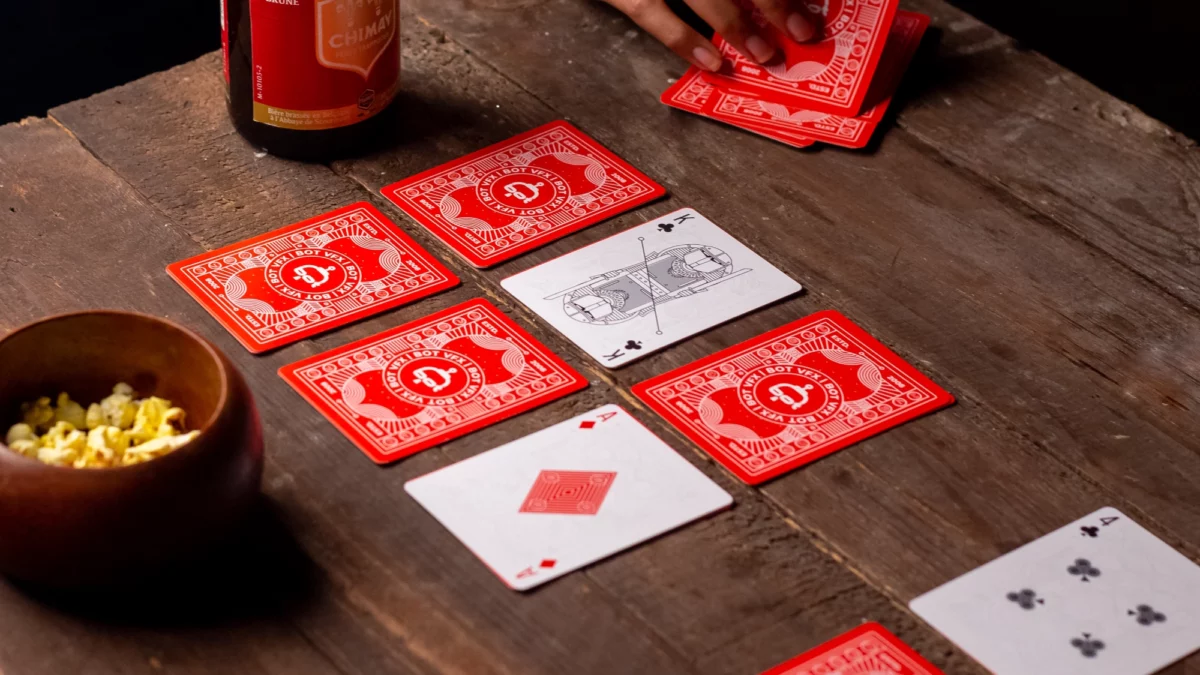
    THE POINTLESS PURSUIT A.K.A. (SIX CARD GOLF)

    THE POINTLESS PURSUIT A.K.A. (SIX CARD GOLF)

    Six Card Golf isn’t about distance, it’s about minimizing your score. In this game, your goal is to strategically discard and pair your cards to achieve the lowest possible point total.

    Six Card Golf evolved from traditional card games, though its exact beginnings remain unclear.
    The game is like an editing room. Each swap is like fine-tuning a scene, and every revealed card is a moment of discovery—sometimes thrilling, sometimes a setback.

    HOW TO PLAY THE GAME

    Number of Players 2 to 6 players (optimal with 2 to 4).
    Dealing Rules Each player is dealt 6 cards, face down. Players can look at their cards only after the deal. Players arrange their 6 cards in two rows of three, face down. The remaining cards form a draw pile. The top card is turned over to start the discard pile.
    Gameplay Players take turns drawing single cards from either the stock or discard piles. The drawn card may either be swapped for one of that player’s six cards or discarded. If the card is swapped for one of the face-down cards, the card swapped in remains face up. If the card drawn is discarded, the player can then choose to flip a card face up.
    Scores and Winning Each ace counts 1 point. Each 2 counts minus 2 points. Each numeral card from 3 to 10 scores face value. Each jack or queen scores 10 points. Each king scores zero points. A pair of equal cards in the same column scores zero points for the column (even if the equal cards are 2s). The game is played over a predetermined number of rounds (e.g., 9 rounds), and the player with the lowest total score at the end wins. Players may need to draw additional cards if they fail to follow the turn sequence or play an illegal move.

    MORE GAMES

    Stay tuned and check back often! We’ll be rolling out more exciting card games to keep the fun going.
    THE SPADE HEIST A.K.A. (SPADES)

    THE SPADE HEIST A.K.A. (SPADES)

    “A Cutthroat Card Caper Where Teamwork Makes the Dream Work (or Steals the Show)
    “”The Spade Heist”” isn’t just a game; it’s a high-stakes heist game unfolding on your table. You and your partner are a daring duo, strategizing bids and executing cunning plays to amass the most tricks/rounds.”

    Spade like a well-crafted heist film with a surprising twist, emerged from the shadows of earlier card games like whist in the 1930s America. Just as these early games laid the groundwork for intricate bluffing and strategic play, Spade took inspiration, evolving into a tense competition where wits and teamwork reign supreme.

    HOW TO PLAY THE GAME

    Number of Players Typically 4 players, usually played in partnerships (2 vs. 2). Can be adapted for 2 or 3 players.
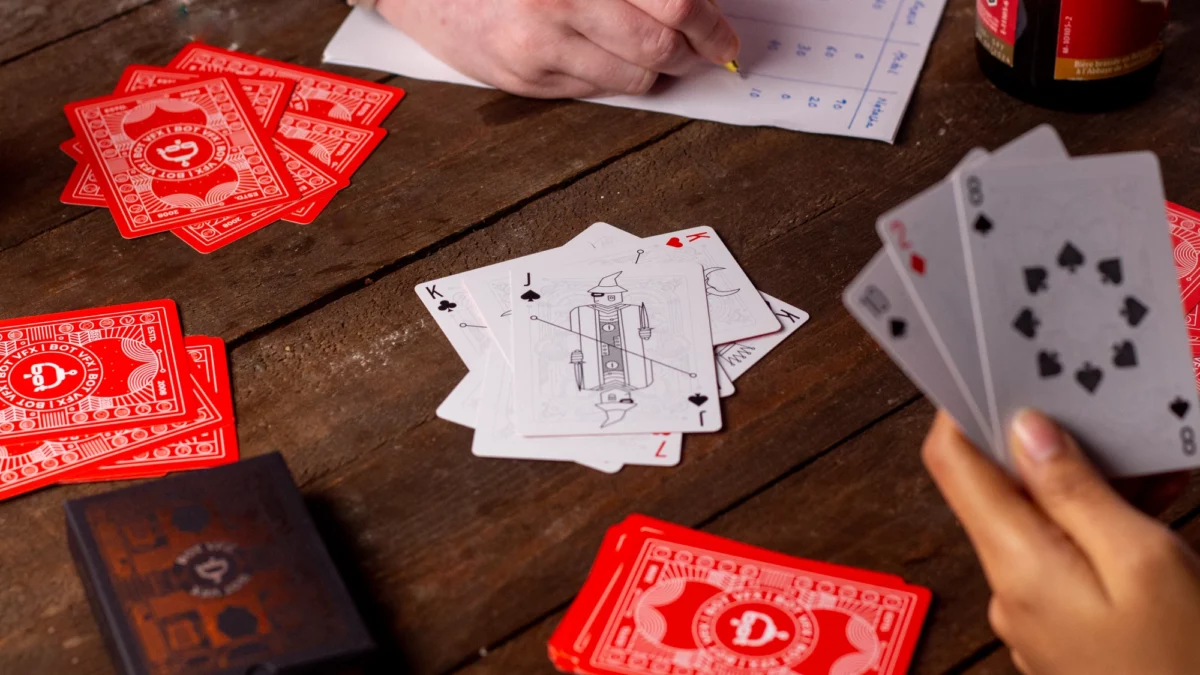
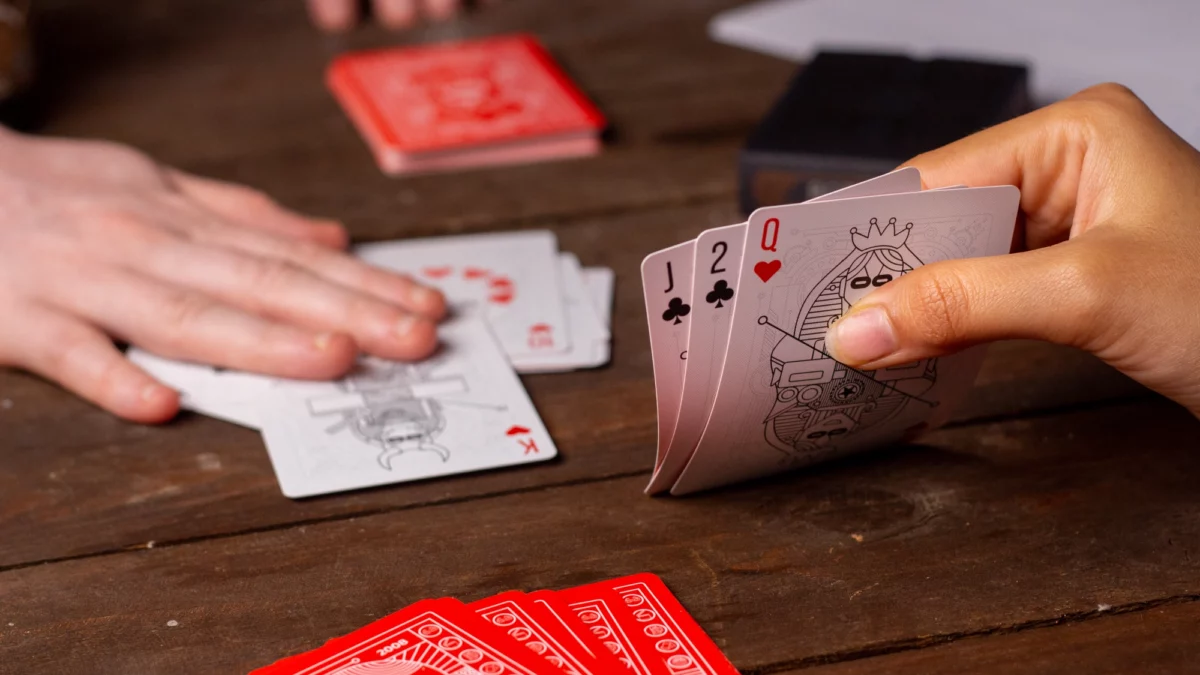
    Dealing Rules Each player is dealt 13 cards in a clockwise manner. Players form partnerships sitting across from each other. A scoring sheet is often used to track points.
    Gameplay Players bid on the number of tricks/round they expect to win. There is only one round of bidding, and the minimum bid is One. Every player must make a bid; no player may pass.

    Play proceeds clockwise, with each player playing one card per trick. The trick is won by the player who plays the highest trump or if no trump was played, the player who played the highest card in the suit led. The player who wins the trick leads next. Play continues until none of the players have any cards left.

    Scores and Winning For winning each trick/round (the number of trick/round bid), the player scores 10 points for each trick bid, plus 1 point for each overtrick. The first team to reach or exceed 500 points wins. Players may receive penalties for failing to follow bidding rules or play order, often leading to a deduction of points.

    MORE GAMES

    Stay tuned and check back often! We’ll be rolling out more exciting card games to keep the fun going.
    CARD CLASH A.K.A (WAR)

    CARD CLASH A.K.A. (WAR)

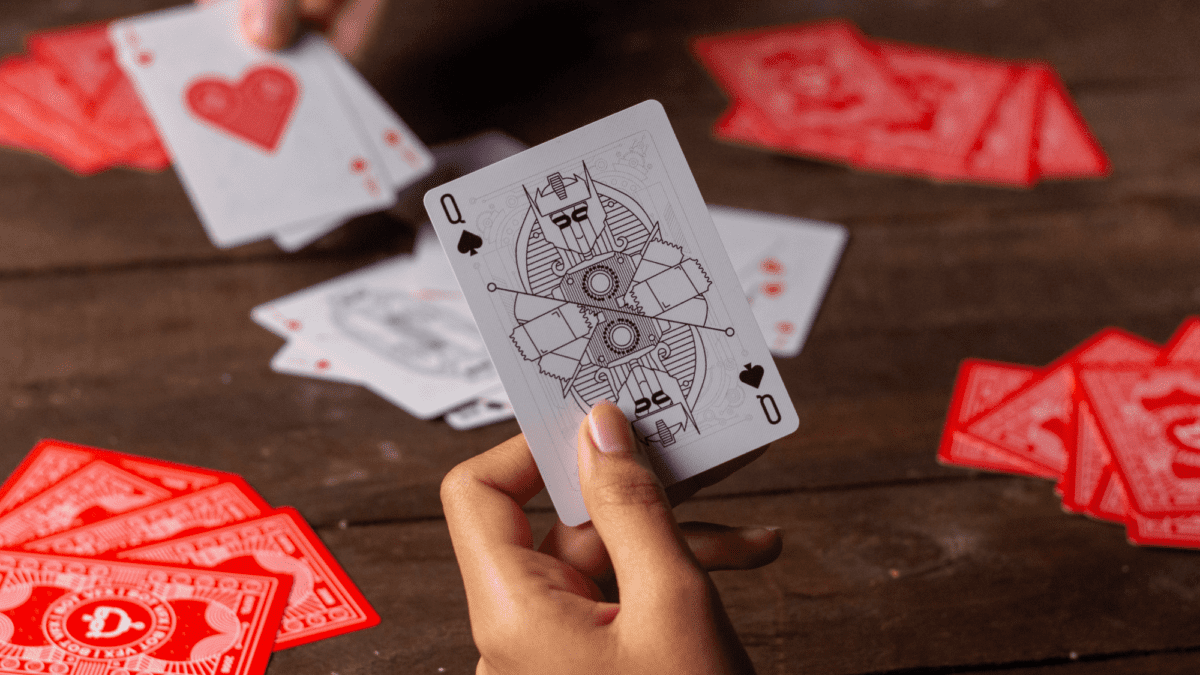
    In this epic duel, you’ll face off against your opponent, drawing swords (cards, that is) and battling until only one warrior remains standing (with all the cards, of course).

    Its roots delve deep into the history of card games, where similar battles of chance and strategy have been played for centuries across cultures.

    HOW TO PLAY THE GAME

    Number of Players 2 players (can be adapted for more, but traditionally played between two).
    Dealing Rules The deck is shuffled and divided evenly between the players, resulting in two equal stacks. Players place their stacks face down in front of them.
    Gameplay Each player reveals the top card of their stack simultaneously. The player with the higher card wins both cards and places them at the bottom of their stack.
    Scores and Winning There is no formal scoring; the objective is to win all cards. The game ends when one player has all the cards. A player wins when they have collected all the cards from their opponent. Typically informal; players can agree on penalties, such as losing a round of cards if a rule is broken.

    MORE GAMES

    Stay tuned and check back often! We’ll be rolling out more exciting card games to keep the fun going.
    OLD HANDMAID’S TALE A.K.A. (OLD MAID)

    OLD HANDMAID’S TALE A.K.A. (OLD MAID)

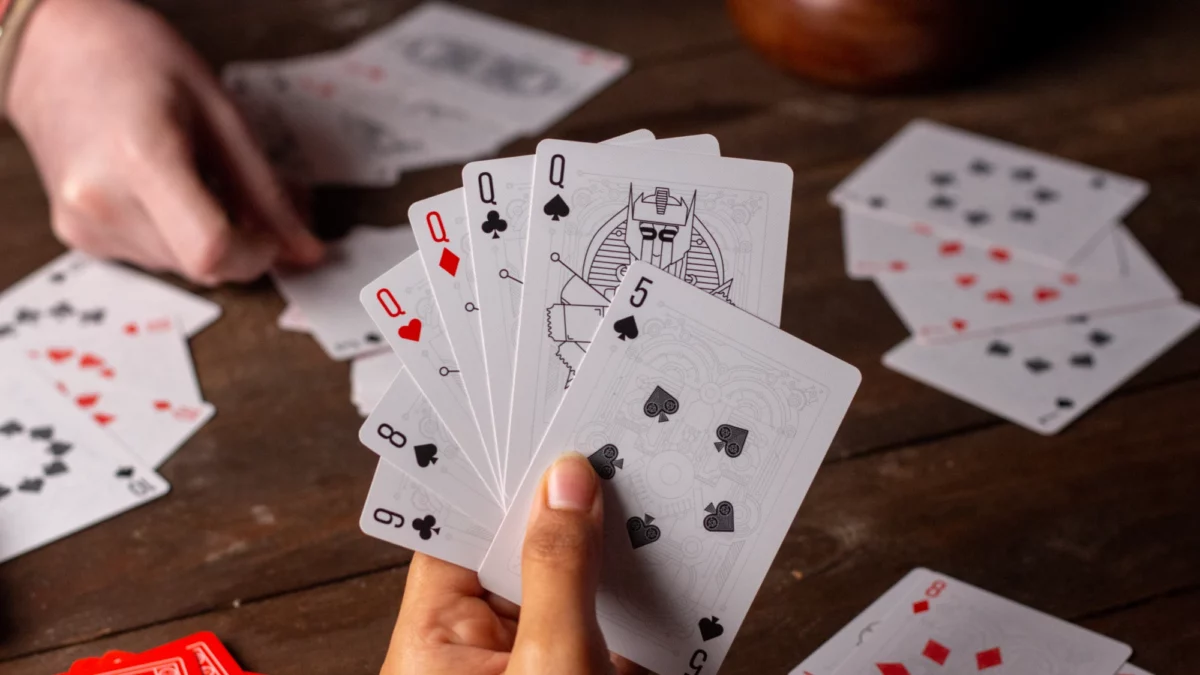
    The fun really begins after it gets dystopian. No one wants to be stuck with the Old Main in this game.

    Dating back to 17th-century Europe, Old Maid thrives on misdirection and strategy—elements also central to the craft of VFX. Much like concealing imperfections in film to create seamless visuals, players must hide their “Old Maid” card while outmaneuvering opponents. It’s a game of wit and bluffing, perfectly mirroring the ingenuity of cinematic illusions.

    HOW TO PLAY THE GAME

    Number of Players 2 to 8 players (best with 3 to 6).
    Dealing Rules Shuffle the deck and deal all cards to players. If using a standard deck, remove one Queen (to create the Old Maid). Players sit in a circle and receive their dealt cards. Players sort their cards into pairs and discard them face up.
    Gameplay Players take turns drawing a card from the hand of the player to their left. If they can form a pair, they discard it.
    Scores and Winning No formal scoring system; the game ends when all pairs are matched, and one player is left with the Old Maid. The game continues until all pairs are matched. The player left with the Old Maid loses. Generally informal; players can agree on penalties for drawing cards from the wrong hand or for any other infractions.

    MORE GAMES

    Stay tuned and check back often! We’ll be rolling out more exciting card games to keep the fun going.
    PIXEL FISHING A.K.A. (GO FISH)

    PIXEL FISHING A.K.A. (GO FISH)

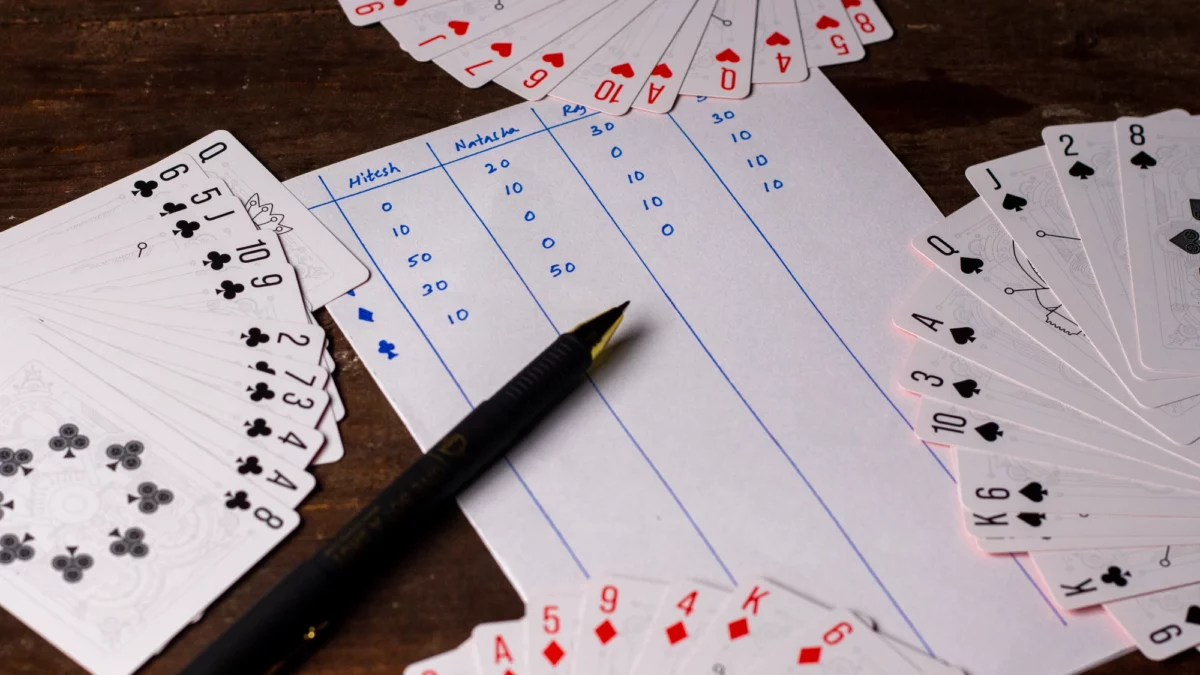
    You thought what? No, we would never use that kind of language (publicly). This is not Card Against Humanity (although we’re working on a version) !

    Emerging in the mid-19th century, Go Fish captures the essence of seeking and connecting—values at the heart of collaborative VFX work. As players ask for cards to complete sets, the game mirrors the search for the right tools and ideas in visual storytelling, proving that persistence and teamwork yield the most satisfying rewards.

    HOW TO PLAY THE GAME

    Number of Players 2 to 6 players
    Dealing Rules For 2-3 players: 7 cards each; for 4-6 players: 5 cards each. Remaining cards form the draw pile.
    Gameplay Take a look at the cards in your hand and choose to ask about cards you already have multiples of so you can make matches quicker.

    Players take turns asking one another for specific cards. If the player asked has the card, they must give it and you get another turn and can ask again. If not, the asking player draws from the pile.

    Scores and Winning A player scores a point for each set of four cards collected. The game ends when all sets of four are collected, or the draw pile is empty. The player with the most sets wins. Players may not ask for cards they do not have; infractions can lead to skipping a turn or a warning.

    MORE GAMES

    Stay tuned and check back often! We’ll be rolling out more exciting card games to keep the fun going.
    SWEATBOX A.K.A. (JUDGEMENT)

    SWEATBOX A.K.A. (JUDGEMENT)

    Perespiration is a natural byproduct of working as a visual effects pro. So complement the perspiration with the inspiration in this game.

    A trick-taking game with roots in Indian card-playing traditions, is all about foresight and calculated risk—skills crucial to the world of VFX. Predicting outcomes and planning actions reflect the precision required in crafting breathtaking movie sequences, making Judgement a true game of mastery.

    HOW TO PLAY THE GAME

    Number of Players Typically 4 players, but can be played with 2 to 6 players.
    Dealing Rules The dealer shuffles the deck and deals a fixed number of cards to each player (usually 13 in a 4-player game).
    Gameplay Players take turns bidding on the number of tricks they believe they can win. After bidding, play begins with the player who bid the highest.

    If a player has the suit that is being played, then he must play that suit. If the player does not have that suit then he can use the trump to get the hand or “fuse” meaning play any other suit to let go of the hand.

    Scores and Winning Points are awarded based on successful bids: typically, players earn 1 point for each trick won and bonus points for fulfilling their bid. The player with the most points after a predetermined number of rounds wins the game. Minor infractions may lead to point penalties or the player losing their turn.

    MORE GAMES

    Stay tuned and check back often! We’ll be rolling out more exciting card games to keep the fun going.

    CRAZY LATE A.K.A. (CRAZY EIGHT)

    CRAZY LATE A.K.A. (CRAZY EIGHT)

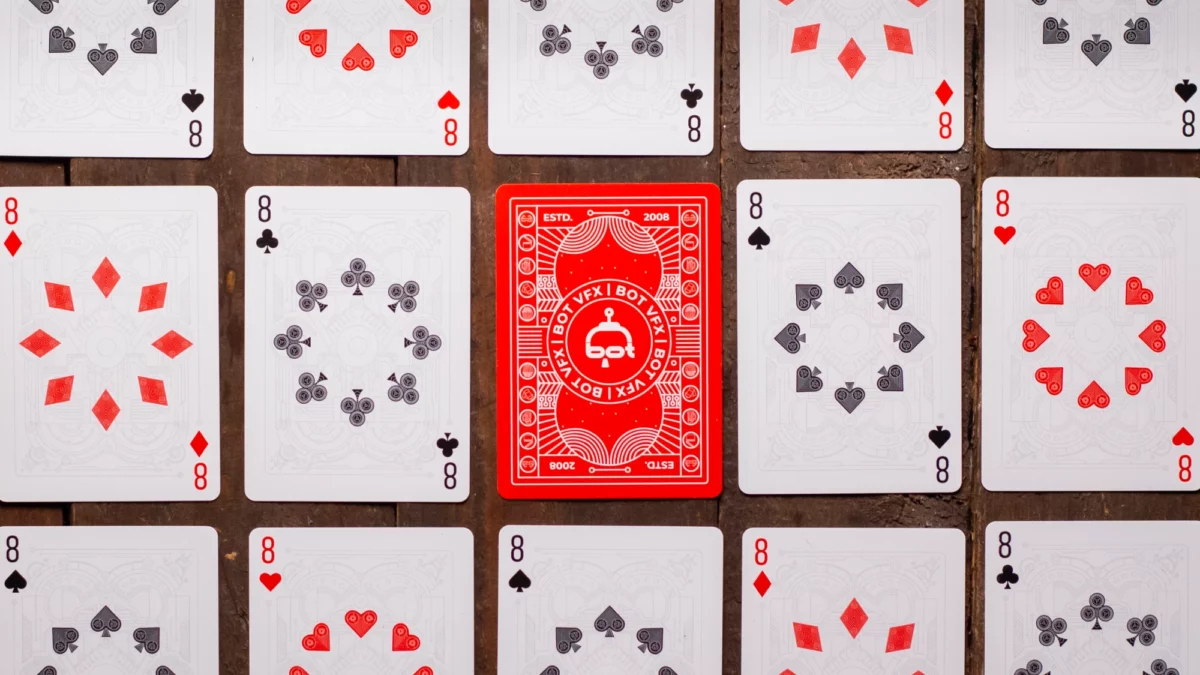
    If you’ve worked in visual effects, you have experienced what Crazy Late is. Fondly relive the PTSD of late nights, and crazy deadlines with this game. Remind yourself often that it’s only a game.

    Born in the 1930s as a playful escape, Crazy Eights thrives on spontaneity, much like the ingenuity required to craft cinematic magic. With its ever-changing rules, the game encourages adaptability—a skill as vital on the card table as it is in bringing imaginative worlds to life.

    HOW TO PLAY THE GAME

    Number of Players 2 to 7 players (best with 3 to 5).
    Dealing Rules Each player is dealt 5 cards (7 cards if there are only 2 players). The remainder forms the draw pile. The top card of the draw pile is turned over to start the discard pile.
    Gameplay Players take turns in clockwise order. On a turn, a player must either play a card matching the top card of the discard pile either in suit or in denomination.

    If unable to play, cards are drawn from the top of the draw pile.

    All eights are wild! That is, an eight may be played at any time in turn, and the player need only specify a suit for it (but never a number). The next player must play either a card of the specified suit or an eight.

    Scores and Winning Points are typically not scored until the end of a round. Points can be assigned based on the remaining cards in other players’ hands. The game can be played to a specific point total (e.g., 100 points) or until a player wins a predetermined number of rounds. Players may need to draw extra cards if they attempt to play an illegal card or skip their turn.

    MORE GAMES

    Stay tuned and check back often! We’ll be rolling out more exciting card games to keep the fun going.