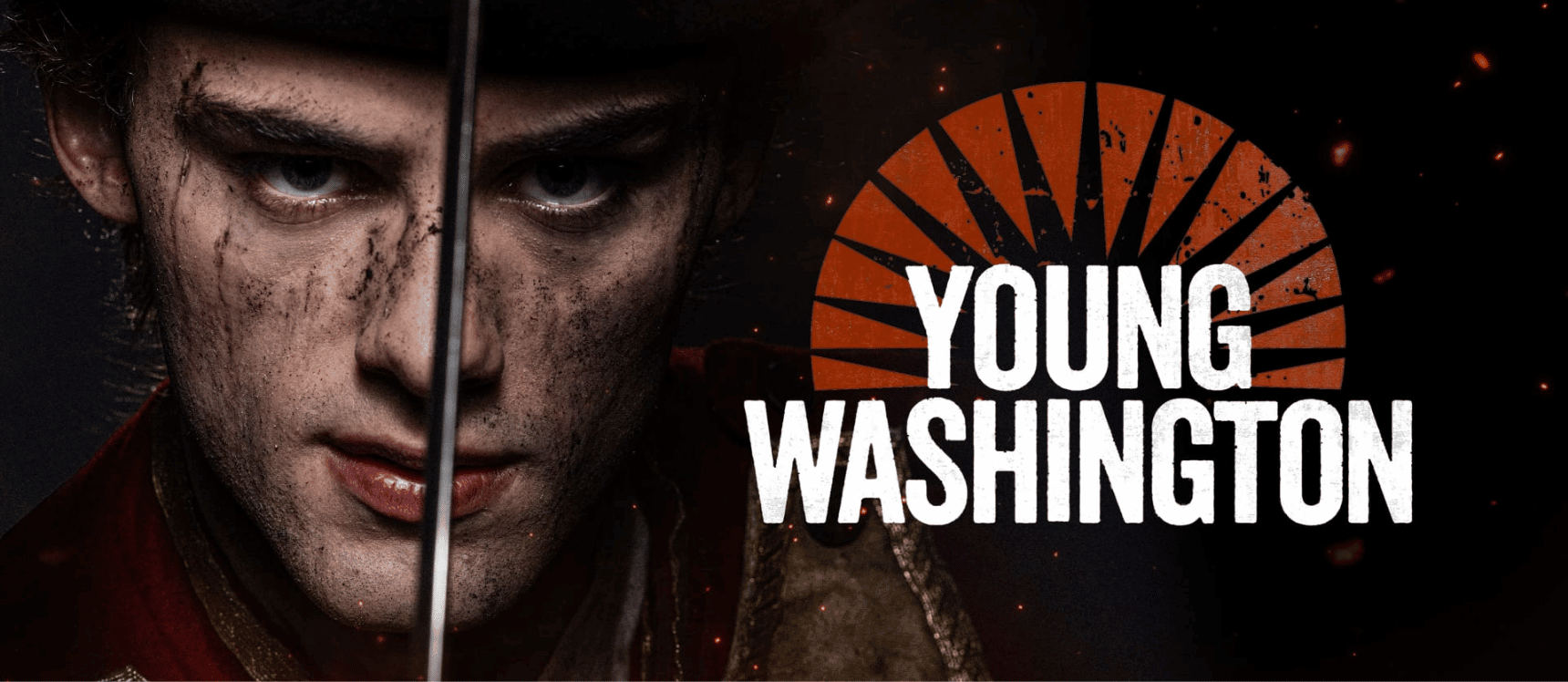
Young Washington tells the story of George Washington’s early years, before he became one of the most important figures in American history. Set against the backdrop of the French and Indian War, this film follows his experiences as a young military officer, from the challenges of leadership to the realities of 18th-century warfare. The story takes us through large-scale battles, colonial towns and the American wilderness, providing plenty of opportunities for visual effects to help bring this period to life.
As VFX Supervisor at BOT VFX, I oversaw the delivery of over 300 shots across a 17-week schedule. The work covered a wide range of disciplines, from large-scale battle enhancements and historical environment extensions to fully AI-generated shots and traditional CG effects.
One of the more interesting aspects of this project was the extensive use of generative AI throughout the production. Working with a combination of client-supplied and internally generated AI material, we developed workflows to integrate and enhance the imagery using traditional VFX techniques. This allowed us to expand environments, build larger crowds and create complex action sequences while maintaining the visual quality and consistency required for the film.
Battle Sequences
The film features several major battles, with visual effects playing an important role in expanding the scale of the action and bringing the combat to life.
Much of the work involved enhancing practical photography with additional soldiers, cavalry, wagons and battlefield activity. We incorporated AI-generated elements to create larger groups of soldiers and entire battalions, helping turn relatively small practical setups into much larger military engagements.
The visual effects for the combat sequences combined AI-generated elements with traditional CG and compositing. These effects included musket muzzle flashes, cannon fire, explosions, smoke, flying cannonballs and bullets, along with blood hits and wounds. We also created burning wagons and additional environmental destruction to increase the intensity of the fighting.
One of the main challenges was integrating all these different elements into the original photography. The scale and placement of the soldiers needed to feel natural, while the smoke, fire, and explosions had to work with the existing lighting, camera movement and action.
By combining AI-generated material with traditional VFX techniques, we were able to significantly increase the scale and complexity of the battle sequences while maintaining the realism needed for the film.
Icy River Sequence
The icy river sequence was one of the more technically challenging parts of the project, combining practical character photography with AI-generated environments and additional CG work.
Several shots were created almost entirely using generative AI, including expansive frozen landscapes, dense forests, flowing rivers and icy water. These were combined with practical performances and traditional VFX elements to create a consistent detailed environment across the sequence.
The work also involved extending and enhancing the surrounding landscape, adding forests and terrain, and integrating atmospheric effects to establish the cold, isolated setting. Additional character work included face replacements, while modern-day elements were removed when necessary.
One of the biggest challenges was bringing AI-generated imagery up to the QC standard required for final delivery. Although the generated material provided a strong foundation, it often required considerable additional work to meet the creative and technical requirements of the film.
This included upscaling the imagery to 4K, addressing temporal inconsistencies and cleaning up artifacts that became more noticeable at higher resolutions. The limited bit depth of some AI-generated material also presented challenges during compositing and colour adjustments.
The sequence required a combination of AI generation, CG environment work and detailed compositing to bring all the elements together and maintain visual consistency from shot to shot.
Town Environments
A significant part of the work involved creating and extending the historical towns and settlements featured throughout the film.
Some shots were generated almost entirely using AI, while others started with practical photography and were expanded using a combination of AI-generated elements and digital matte painting and CG.
The environments included busy market squares, colonial streets, waterfronts and military settlements. We added buildings, crowds, soldiers, horses, carts, boats and various period-specific props to give the locations a greater sense of scale and activity.
For the larger establishing shots, we also created additional architecture, including forts, churches and residential buildings, along with surrounding terrain and landscape enhancements.
One of the main considerations was ensuring that the generated elements remained consistent with the period and the existing photography. Buildings needed to feel architecturally appropriate, while the placement and movement of people, horses and vehicles had to work naturally within each environment.
The AI-generated material provided much of the initial scene detail, with traditional CG and compositing used to refine the environments, improve their integration and address areas where the generated imagery was less successful.
The result was a collection of much larger and more populated historical environments than could be achieved using the original photography alone.
Mansion Party
The establishing shot of guests arriving by boat and making their way towards the mansion was another example of how extensively generative AI was used on the project.
The shot was created almost entirely using multiple AI elements, establishing the mansion, surrounding landscape, waterfront and arriving guests.
We then enhanced the generated imagery with additional digital matte painting, including trees and refinements to the building facade, to improve the overall composition and integration.
As with many of the fully AI-generated shots, the challenge was taking the initial generated imagery through to a finished VFX shot. This involved resolving artifacts, refining individual areas and ensuring the final image maintained the level of detail needed for 4K delivery.
The shot was a good example of how AI could be used to establish a large and complex environment, with traditional VFX techniques providing the additional control and refinement needed to complete it.
Other VFX Work
Beyond the larger sequences, the film included a wide range of individual VFX shots that helped expand the historical setting and support the action.
These included additional fortifications, military encampments, tents, props and environmental extensions. We also enhanced existing buildings and landscapes: adding trees, replacing backgrounds and removing modern-day elements that were inconsistent with the period.
Character work included face replacements, ear reconstruction and various wound enhancements.
There were many shots with these smaller effects and they played an important role in maintaining the historical setting and ensuring the different locations and sequences felt consistent throughout the film.
AI Workflow and Technical Challenges
One of the defining aspects of Young Washington was the development and integration of generative AI workflows into our existing VFX pipeline.
The production involved a substantial amount of AI-generated imagery, with material supplied by the client alongside additional elements and plates developed by our team. Our focus was on establishing a reliable workflow that could accommodate these different sources, integrating them with traditional CG and compositing, and bringing the results to final delivery standards.
We also developed our own AI generation workflows, allowing us to create additional elements, extend environments and provide alternative solutions where needed. This gave us greater flexibility in addressing creative challenges and allowed us to determine when AI generation or traditional VFX techniques would be the most effective approach.
However, integrating AI-generated imagery into a professional VFX pipeline introduced its own technical challenges.
Maintaining temporal consistency was particularly important, as generated sequences could contain changes in detail, unwanted movement or artifacts between frames. These issues often required additional cleanup and compositing work.
Resolution was another significant consideration. Much of the generated imagery needed to be upscaled to 4K, and this process could reveal imperfections that were less noticeable at the original resolution. Limited bit depth also reduced the flexibility available during compositing and colour adjustments.
The workflow therefore involved much more than simply generating images. It required evaluating the material, identifying areas that needed additional work and developing solutions that combined the strengths of generative AI with the precision and control of traditional VFX.
This approach allowed us to manage a large volume of AI-generated material while maintaining consistency across the sequences and meeting the technical requirements of the production.
Conclusion
Young Washington was a particularly interesting project to supervise because of the scale of the work and the opportunity to explore new approaches using generative AI.
The team delivered a wide variety of effects, from large battlefield enhancements and historical environments to fully AI-generated shots, all within a relatively short production schedule.
What made this project different was the amount of problem-solving involved in developing our AI workflows and finding ways to integrate AI-generated material into our traditional VFX pipeline. There were plenty of technical challenges along the way, particularly with image quality, consistency and 4K delivery, but each one helped us refine the process.
I am very proud of what the team achieved on this project, both in terms of the finished shots and the experience we gained working with these new tools. The project demonstrated how generative AI and traditional visual effects can work together, and how an established VFX pipeline can provide the technical expertise and creative control needed to bring AI-generated imagery to the screen.